


Soul Food: Amma Pillai's Flavourful ‘Brinji’ Recipe & The Hypnotic Thimithi Festival in Mauritius
- Brittany Bunce
- Jul 5, 2021
- 9 min read


This blog post comes from a draft of a book I started writing a long time ago but hasn’t come to fruition. The idea was inspired by my many soulful adventures in India and then a wonderful trip to Mauritius. I have always been so in awe of the incredible diversity of regional cuisines in India and fascinated by how its rich culinary traditions persevere but also transform when transported to new lands by diaspora communities- as is the case with the Tamil community in Mauritius. The book, still in the dreaming phases and now more likely to be shared as a set of blogs, would explore the food, spirituality, culture and lives of the Tamil people in India, Sri Lanka and the diaspora. Be sure to scroll to the end for a delicious recipe of vegetable ‘Brinji’ I first discovered at Thimithi Festival in Mauritius!

This Soul Food book seeks to pay homage to the two things that continue to inspire and indulge my senses and spirit and continually draw me back with an insatiable appetite for the East. Both these things are ‘otherworldly’ and arouse a sense of the sacred. They are the result of a tireless accumulation of ritual human endeavour, perfected over centuries. The two things this book weaves together in a sacred union are food and spirituality- my two lifelong loves.

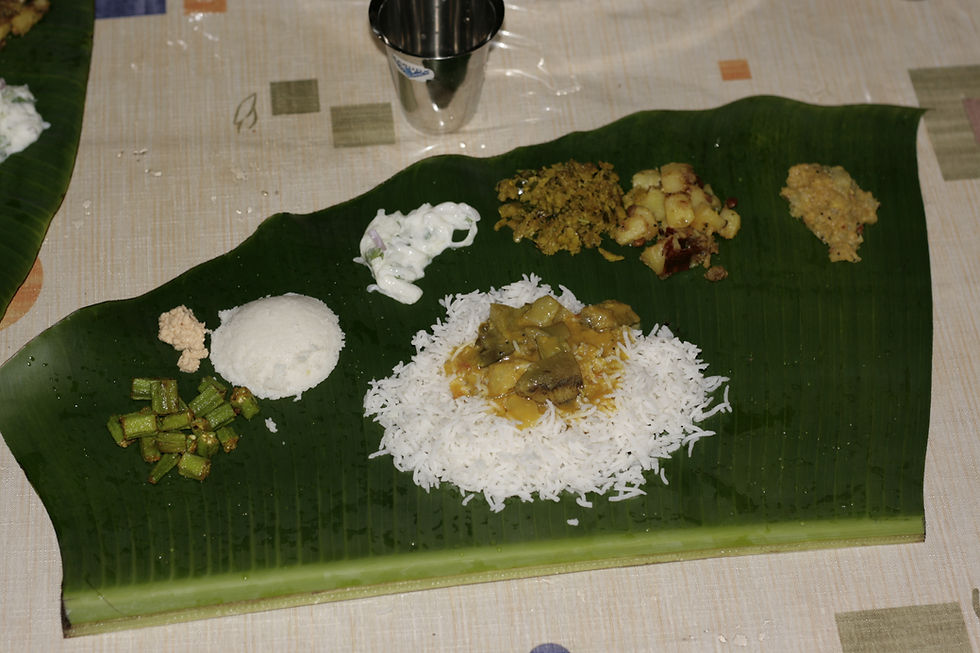
I have always been in awe at the mass of people who are catered for by temples, ashrams, churches and mosques in the East and how divine and bursting with flavour this food is- contrary to the caricature of bland and unpalatable food one might expect to find in a church soup kitchen in the West. In fact, if you look at some of the best Indian cookbooks, for example by Madhur Jaffrey, the food from holy places is featured proudly. In the book I wanted to embark on an odyssey, not only to explore the tantalizingly delicious recipes of these holy places but also to learn more about the people who cook this food, about their personal life stories and spiritual journeys, the things that inspire them and the blessings and hardships that have made them who they are today (the inquisitive social scientist in me) … who are the hands and souls that mold this soul food?

My travels to Mauritius in 2015 happened to lead me into the temples and homes of the warm and hospitable Tamil community in the relatively quieter Southern coast of the island. I was so fascinated and in awe of this culturally rich and vibrant community that it inspired me to research further their history, life stories and incredible food for my book. I met Amma Pillai (‘Mother Pillai’ as she is known in the Tamil community) at the Thimithi Festival held at the Terracine Mariamen Kovil in the South of Mauritius. She was wearing an exquisite bright purple and orange sari embellished with intricate gold spiral patterns. She moved gracefully around the temple after the prays and fire walking ceremony on the 10th day of Thimithi, with a silver plate in hand with the offerings of pieces of apple, pear and a rice lamp Arisi Maavuvilakku (a rice and ghee mixture which is a special offering to Amman) made of rice and ghee. She smiled lovingly, holding the plate up and urging me to take some of the sweet rice. Her face, gentle and warm, immediately putting you at ease. Later on she invited me to cook Brinji and some other incredible dishes (some of the very best food I have ever had the privilege of eating). It was an experience and connection that I will always treasure.

Amma Pillai was born in the North of Mauritius near the village of Pamplemousses on 6 November 1955. In 1978 she left Mauritius to live in India in Chennai where she studied the Tamil language. It was in Chennai where she met her husband Sivaramen, who is also a Mauritian from the South of the island and was studying economics at Madras University. In 1984 they returned back to Mauritius and settled in the South in Souillac. She misses Chennai a lot, the food, the temples and watching the fantastic movies and being able to speak Tamil every day.

Amma took up another job as a Tamil teacher in a primary school in Souillac. Soulliac is a charming village on the Southern coast of Mauritius. Amma Pillai’s house is just off one of the small side streets inland from the coast. The streets are lined with exotic fruit trees, the beautiful bright green leaves of banana trees shading the streets and the towering mango trees releasing a sweet, delightful fragrance. Her house is a stone’s throw away from the Sivasoopramahen Kovil, an apt reminder of the centrality of religion to the lived reality of the community who have settled in this scenic part of the island.

Amma Pillai is passionate about her Tamil heritage: “preserving the language is very important to me because it is also the preservation of our culture and identity”. A similar loss of the distinct Tamil cuisine is also a feature of modern Mauritian society. She explained that there are few authentically Tamil recipes that have survived in the form they originated in from Tamil Nadu in India. The only authentic recipes that have survived largely intact are the cakes like ‘Adhirasam’. Amma explained: “The challenge is that in all the Tamil houses many families use the ready-made Masala that you can buy, in all of the curries. So, you don’t get the different and distinct flavours of each curry”. The style of cooking in Mauritius has amalgamated with the Tamil recipes to create something of a hybrid cuisine- the Creole Mauritian food- with influences from African, Indian, and French cuisine.

Amma Pillai is a member of the women’s association at both the Terracine Mariamman Kovil (dedicated to the goddess Mariamman) and the Siva Soopramanien Kovil (dedicated to Murugan). The role of the women’s association at the temples includes cooking the flavoursome and delicious delights that are served during festivals and coordinating the cultural programme which includes singing, dancing and the enactment of religious dramas on festivals such as Diwali.

The Thimithi Festival is centred upon the dramatic ritual of fire walking. Thimithi is dedicated to the goddess Draupadi Amman. The festival commemorates the battle of the Pandavas and Kauravas, immortalised in the Mahabharata. The heroine is the Goddess Draupadi, the wife of the five Pandava brothers and a revered village goddess, believed to be an incarnation of the Hindu goddess Kali. She is worshipped as someone who endured many misfortunes but managed to hold on to Hindu principles and to her pure soul and dharma. The significance behind fire walking is to demonstrate purity and bhakti (devotion) to the goddess. If the devotee manages to walk on fire and emerge without burns, this symbolises the success of fasting and assures their purity is akin to that of the goddess Amman. Amma Pillai explained that devotees use Thimithi as a chance to show a commitment to Draupadi Amman, who in return grants devotees blessings such as curing illness or granting good fortune.

Devotees practice fasting and a strict vegetarian sattvic diet. Each evening prayers are held where the Mahabharata is read and some parts enacted, afterwards devotees are served sattvic food (pure, conscious, ahimsa/non-violent). The ritual of fire walking takes place on the 10th day after fasting began and also involves ritual piercing through the tongue and cheeks. The Tamil Temples in Mauritius are painted in a vibrant festival of colours and ornately adorned with carvings of the many gods and goddesses, but I noticed especially Mariamman the South Indian Hindu Goddess of rain. The explosion of colour aptly equals the vibrancy of the culture and the exquisite colourful saris that the beautiful women were wearing.

All are in high spirits, partaking in the intoxicating spiritual state required to successfully walk on the fiery coals. The fire pit is positioned a short distance away from the front of the temple in the main temple compound. Dug into the ground in a permanent structure it stretches for about 30 metres long and at its end is a separate pit full of milk where men wait and assist those walking by lifting them into the pit, to plunge their scorched feet into. Devotees begin gathering around the fire pit and the priest, who is in fact from Tamil Nadu, leads the singing, which is accompanied by the melodic and enchanting sounds of traditional instruments. This specific ceremony that I witnessed included many young teenagers and the courage and zen-like state in which they approached walking across the scorching coals was awe-inspiring. The crowd of devotees, with their eyes firmly fixed on the ‘fire walkers’, too seemed to join in with the trance like state required; clapping to the sound of the drums and in solidarity with the profound and divine sacrifice and commitment that the ritual symbolises.

After the fire walking women began handing out exquisitely fragrant plates of vegetable Brinji. Amma Pillai explained that in Tamil Nadu in India she never saw Briyani being served during Thimithi but in Mauritius it is popular and is also chosen for pragmatic reasons- it is easy to serve to devotees. You may just as easily however encounter ven pongal, lemon rice, coconut rice, tamarind rice, tomato rice or curd rice being served at Thimithi at the close of the daily prays held each evening during festivities.


Brinji Recipe
I have included here a delicious, light and fragrant coconut Brinji recipe that I had the privilege of cooking with Amma Pillai in her home. The same dish was served on the last night of the Thimithi festival at the Terracine Mariamen Temple to the around 100 devotees that had gathered at the small kovil.

This vegetarian, coconut rice dish achieves a miraculous balance between robust flavours and yet remains light. The lightness is in part achieved through the use of fresh coconut milk, which is hand drawn from a coconut and is lighter than that found already in a can and so in my opinion is completely worth the extra effort. Amma Pillai explained that she never uses canned coconut milk and it was clear she had a deep resonance for the ritual of extracting the milk herself. However, if you can’t find a fresh coconut or don’t have the time to go through the process, it can be supplemented with canned coconut.

This Brinji also doesn’t have the usual oily texture one expects in a Briyani. This is also a popular dish in Tamil Nadu and can be eaten on any occasion for breakfast, lunch or dinner, at family gatherings and celebrations and other festivities. It can be eaten on its own or as an accompaniment to other dishes, such as anyone of the delicious 7 curries cooked for Kaavadi (which I’ll document in my next blogs).
Ingredients

· 3 ½ cups of rice
· 8 cardamom pods
· 1 red onion diced into medium sized pieces
· 5 bay leaves
· 2 small cinnamon sticks
· 6 curry leaves (roughly chopped)
· ½ tsp turmeric
· 2 big green chillies cut into big pieces (so the dish is not too hot)
· Ginger (a thumb sized piece) and garlic (6 cloves) which can be crushed into a paste in a pestle and mortar
· A handful of fresh cilantro
· A handful of fresh mint
· 2 coconuts- milk and flesh separated.
· 250 grams assorted fresh vegetables: potato, green beans, carrots, cauliflower, green peas (chopped into relatively small pieces)
· 100 grams of soy
· 50 grams of cashews
· 100 grams of ghee
· 50 grams of peanuts
Preparation

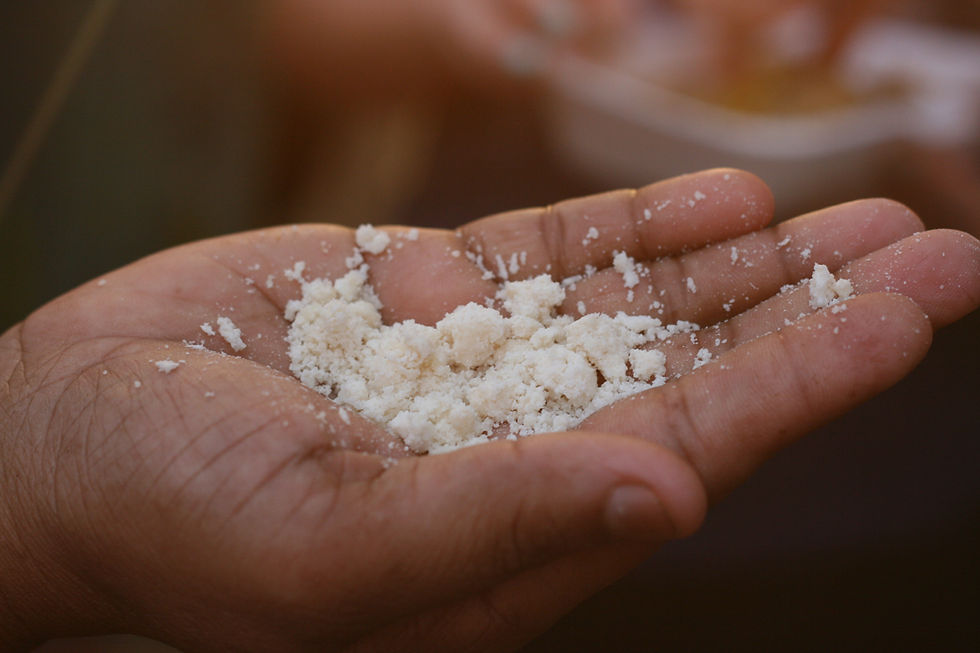
· For the coconuts: crack them open and remove the white flesh. Cut the small pieces and put it through a grinder. Add about a cup of water, which enables you to remove the milk from it by squeezing it. Put the water through a sieve. Keep it aside.
· For 3 1/2 cups of rice you need 6 cups of water and coconut milk (combined). Based on how much coconut milk you managed to extract from your coconuts, add enough water until you have 6 cups (i.e. if you got 4 cups of milk add 2 cups of water, and so on). Keep aside for now.
· For the ginger and garlic paste, simply chop both up roughly and combine the ingredients in a pestle and mortar, grinding together until you have a smooth paste.
· Peel the potatoes and carrots and cut all the vegetables into equal, relatively small cubes.
· Put the potatoes into a pot, cover with just enough water, ½ spoon of turmeric powder and ½ spoon of salt and lightly boil for 5 minutes after which you can add the carrots and cook for a further 2 minutes and then add the rest of the vegetables and cook until they are al dente (about 2 minutes more). Remove from the pot and run under cold water to prevent them from cooking further. And set aside for later.
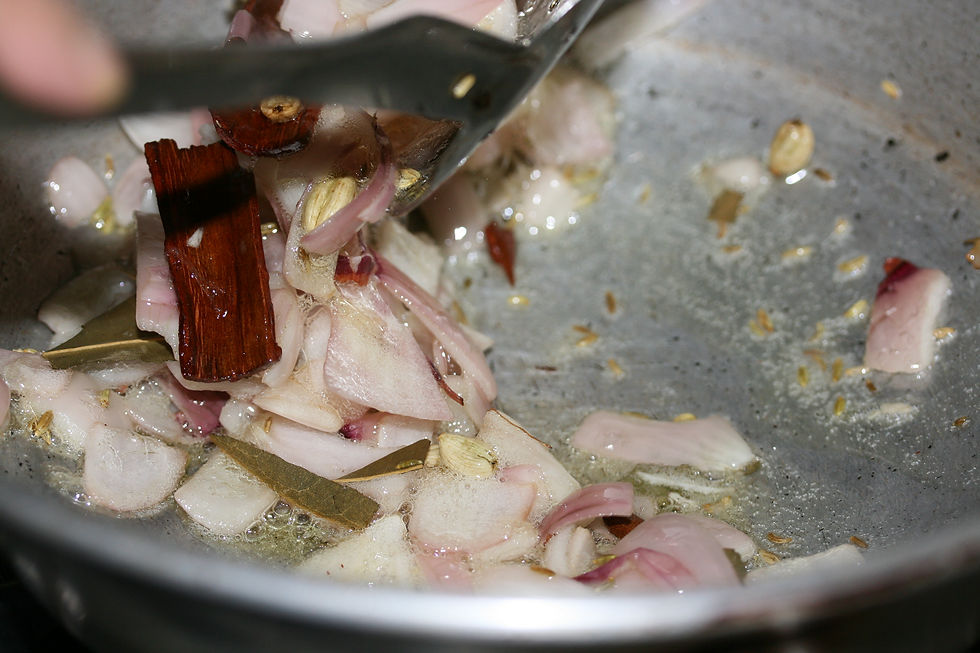
· Add ghee and oil to the pan on a medium heat. Add the cinnamon sticks and let them sizzle, then add the cardamom pods, bay leaves, onion, chilli and curry leaves and let it cook for about 3 minutes, stirring the ingredients around slowly. Then add the ginger and garlic paste and cook for another minute turning all the time. Add the chopped coriander and mint and stir a few times.

· Take the pot off the heat and add the rice, stirring around using the latent heat of the pot to allow the rice to soak up the delicious flavour of all the ingredients
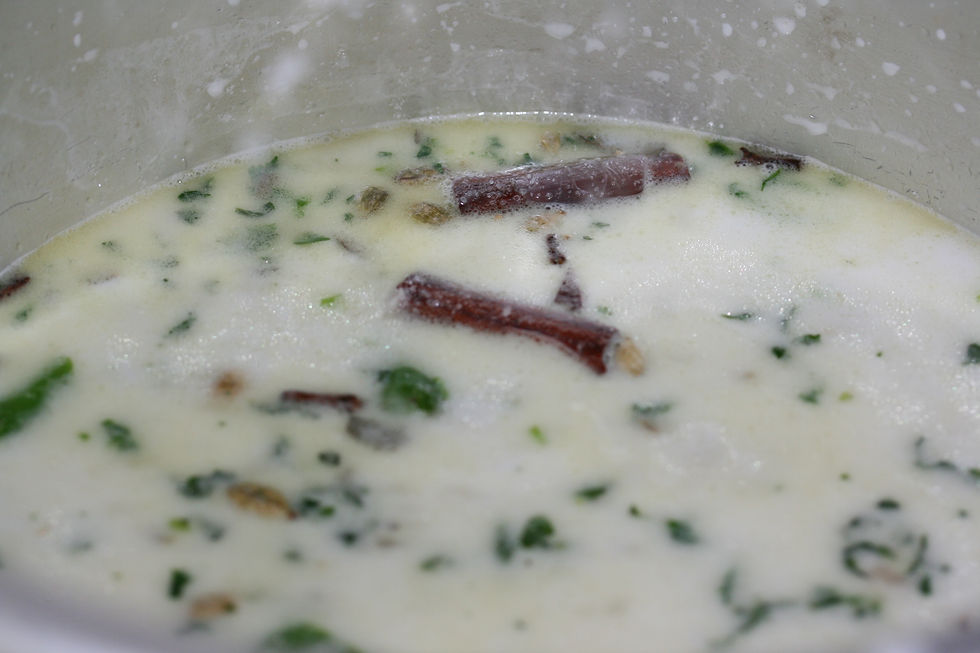
· Put the coconut milk in a rice cooker (or pot) and add the spicy rice mixture and a large pinch of salt to this. Add a spoon of ghee and put it on to cook on a medium-low heat for about 10 minutes.
· Meanwhile heat a small pan on a medium flame and add ghee. When it melts and heats, fry the cashew nuts.
· If you want to add soy to your dish, you can cut it up into small cubes, mix it with ½ tsp of good chili powder and lightly fry in peanut oil.
· Once the water/coconut has reduced and the rice is ready you can add the vegetables and soy and lightly turn to mix it well. Cover this and allow to cook for a further minute or two. Take off the heat and mix the cashew nuts and finish by garnishing with some more fresh coriander.
Fragrant, light and beautiful … enjoy this kind, soul food.

Gratitude to the wonderful Amma Pillai for sharing this delightful ‘Brinji’ recipe with me and for her warm hospitality, which will remain beautifully etched in my memories of Mauritius.


Comments